Before Your Puppy Comes Home
Get these three things sorted before pickup day, not after.1. Puppy-proof the house
Puppies explore with their mouths, and Indian homes have plenty of hazards that don’t get talked about enough:- Loose electrical wires and extension boards (a classic chew target).
- Money plants, aloe vera, and other common Indian houseplants that are toxic to dogs.
- Balcony grills — check the gap width if you’re on a higher floor. Small-breed puppies can slip through more than you’d expect.
- Cleaning supplies and phenyl bottles kept low under the sink.
2. Pick a vet before day one
Don’t wait until there’s an emergency to find one. Look for a clinic within a 15–20 minute drive, confirm they handle puppy vaccination schedules, and save the number in your phone.3. Decide on a feeding and toilet routine in advance
Puppies do best with consistency from the first day, not a “we’ll figure it out” approach.The Complete Supplies Checklist
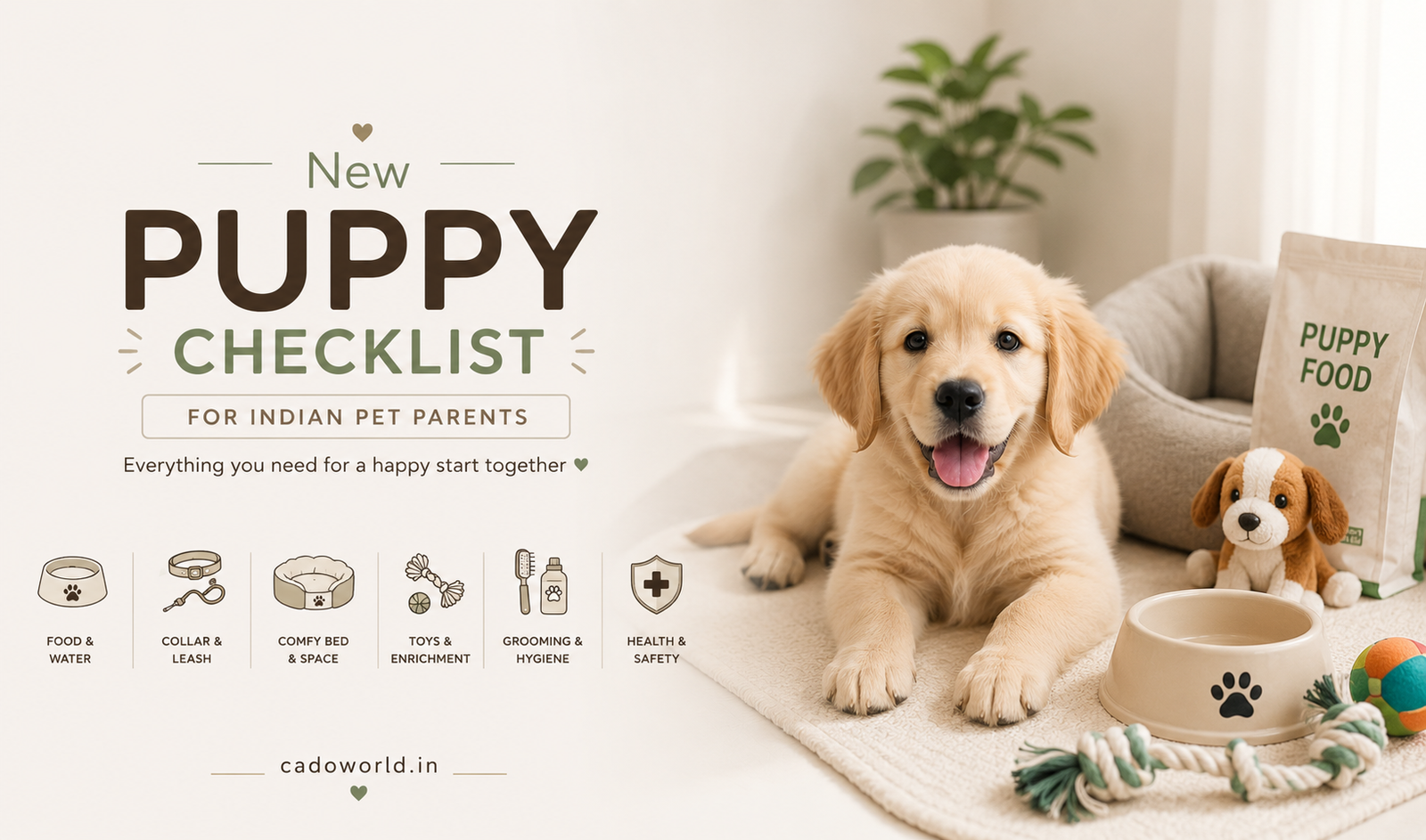
Here’s everything broken down by category, roughly in order of urgency.Feeding & Water
- Two bowls — one for food and one for water. Anti-skid stainless steel bowls work best since puppies tend to push lighter plastic ones around the floor while eating.
- Puppy-specific food — ask your vet or breeder what the puppy is already eating and stick with it for at least the first week before transitioning to avoid stomach upset.
- A feeding schedule — most puppies under 3 months need around 4 small meals a day, gradually tapering to 2–3 meals as they grow.
Sleep & Comfort
- A proper bed or mat — puppies can get uncomfortable on tiled or marble floors in Indian homes, especially in winter or under the AC. A cushioned mat keeps them comfortable and gives them their own spot.
- A crate or defined sleeping corner — this can help with house-training and gives the puppy a safe space when things feel overwhelming.
Collar, Leash & ID
- A soft, adjustable puppy collar — it should fit two fingers snugly, not tighter. Puppies grow quickly, so an adjustable collar is essential.
- A bell or ID tag — useful indoors for tracking a puppy that has mastered the art of silently disappearing, and essential outdoors with your phone number in case they wander off.
- A basic leash for early walks — consider a retractable leash only once basic leash manners are established. Puppies need to learn not to pull before using one.
Grooming
- A gentle, puppy-safe shampoo — regular human or adult-dog shampoo can dry out puppy skin. Look for mild, puppy-friendly formulas.
- Wet wipes — useful for quick paw and face clean-ups after walks, especially during monsoon when every walk can turn into a mud situation.
- A grooming glove or soft brush — even short-haired breeds benefit from light brushing. It also helps puppies get comfortable with being handled, making future vet visits and nail trims easier.
Toys & Chewing
- At least 2–3 chew toys of different textures (rubber, rope, or plush) — teething puppies need safe alternatives to furniture, and having variety helps maintain their interest.
- One interactive or treat-dispensing toy — great for mental stimulation and keeping a puppy occupied during work calls.
Health & Safety
- Dewormer and tick/flea prevention — your vet will set the appropriate schedule, but it’s a good idea to have a plan from the first week.
- A basic pet first-aid kit — keep essentials such as cotton and pet-safe antiseptic, along with your vet’s emergency number.
- Consider a GPS or Bluetooth tracker collar once the puppy is old enough for outdoor walks, particularly if you live somewhere with open gates, gardens, or heavy street traffic nearby.
Training & Potty
- Puppy pads or a designated potty spot — if you’re in an apartment without immediate ground access, pads can help bridge the gap until the puppy is ready for outdoor walks.
- Treats for positive reinforcement — small, soft, easy-to-chew treats work best for training.
Vaccination & Vet Schedule for India
Indian vets generally follow a schedule close to this. Always confirm with your own vet, as timing can vary based on the puppy’s health, vaccination history, and breed.| Age | What Happens |
|---|---|
| 6–8 weeks | First deworming and first vaccination. |
| 10–12 weeks | Second vaccination booster. |
| 14–16 weeks | Third booster and first Rabies vaccination. |
| 6 months | Repeat deworming and general health checkup. |
| Ongoing | Deworming and vaccination boosters according to your vet’s recommended schedule. |
A Few India-Specific Notes
- Keep a physical or digital copy of the vaccination card. Some housing societies and pet-friendly spaces may ask for it.
- Some cities, including parts of Delhi under MCD and select municipal areas elsewhere, may have pet registration requirements. Check with your local municipal body or RWA for current requirements.
- Puppies should generally avoid public parks and high-risk outdoor areas until their core vaccination course is complete. Your vet will confirm when it is safe to start outdoor walks.
What It Actually Costs: First Month Budget (Approx., INR)
| Item | Approx. Cost Range |
|---|---|
| Bowls (set of 2) | ₹300 – ₹800 |
| Bed / comfort mat | ₹1,000 – ₹3,000 |
| Collar + leash | ₹400 – ₹1,500 |
| Puppy shampoo + wipes | ₹500 – ₹900 |
| Chew toys (2–3) | ₹1,000 – ₹2,000 |
| First vet visit + vaccination | ₹800 – ₹1,500 |
| Puppy food (1 month) | ₹1,500 – ₹3,500 |
| Estimated Total | ₹5,500 – ₹13,000 |
Your First Week: A Simple Routine
- Morning: Potty break immediately after waking, followed by breakfast.
- Mid-morning: Short play session with a chew or interactive toy.
- Afternoon: Nap time — puppies can sleep for 18–20 hours a day, which is normal.
- Evening: Second meal, gentle walk once vet-cleared, and grooming or brushing time.
- Night: Final potty break, followed by settling into bed or the crate at a consistent time.
Frequently Asked Questions
A proper bowl set and a comfortable bed or mat, sorted before pickup day. Food and water routines start from hour one, and a defined sleeping spot helps house-training from day one.
Most Indian pet parents spend approximately 5,500 to 13,000 in the first month, covering bowls, bedding, grooming basics, toys, first vaccinations, and food. It varies by breed size and city.
Typically between 6 and 8 weeks of age, followed by boosters at 10-12 weeks and 14-16 weeks, alongside the first Rabies shot. Always confirm exact timing with your vet.
Some municipal bodies, including parts of Delhi under MCD, require pet registration, and many housing societies now ask for vaccination proof. Check with your local RWA or municipal office to confirm local rules.
Whatever food the puppy was already eating at the breeder or shelter, kept unchanged for the first week to avoid stomach upset, before gradually transitioning to your preferred puppy food.
Check the gap width in balcony grills, since small-breed puppies can slip through more easily than expected, and move any toxic houseplants like money plant or aloe vera out of reach.