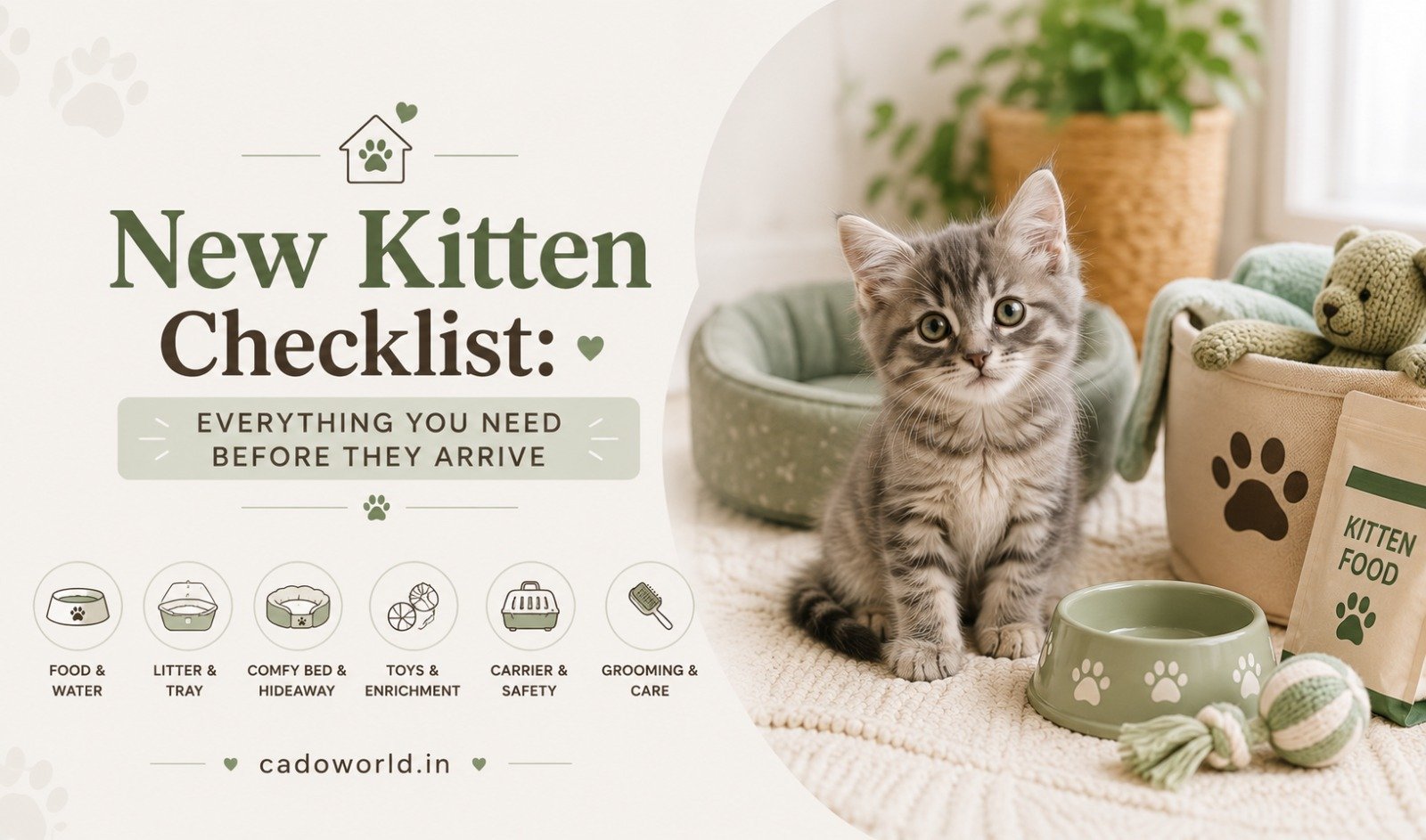
New Kitten Checklist: Everything You Need Before Bringing Your Kitten Home

New Kitten Checklist

So, there’s a kitten coming into your life. Maybe you’ve already picked a name (three times over, probably). Maybe you’re still deciding between the tabby at the shelter and the one your neighbour’s cat had last month. Either way, here’s the truth nobody tells you loudly enough: the first 48 hours matter more than you’d think, and most of what makes them go smoothly is stuff you buy before the kitten shows up, not after.

This checklist is built for that exact window — the few days before your kitten arrives — so you’re not googling “do kittens need a different bowl” at 11 pm while a tiny, terrified furball hides under your bed.

Before Your Kitten Arrives

Don’t set up the whole house on day one. Pick one room — a bedroom, a study, anywhere quiet with a door — and turn it into a “safe room.” This is where your kitten’s food, litter box, bed, and toys will live for the first few days while they get used to your smell, your voice, and the general chaos of a new home. Cats explore on their own terms, and a smaller space helps them feel safe faster than the whole house all at once.

While you’re prepping the room, do two more things: book a vet visit for within the first week (even if the kitten seems perfectly healthy), and decide on the food you’ll start with so you’re not making that decision hungry, tired, and slightly panicked on arrival day.

Feeding Essentials

Kitten Food, Not Adult Cat Food

This one trips people up more than anything else. Kittens are growing fast, and they need more protein and more calories per meal than an adult cat — a bag of regular cat food just won’t cut it nutritionally. Look for something labelled specifically for kittens or “growth,” and consider mixing wet food in alongside dry kibble. Wet food carries a lot more moisture, which helps keep young cats hydrated, especially in Indian summers when water intake matters even more.

Bowls That Actually Work for a Kitten’s Face

Deep, narrow bowls look fine to us, but they can genuinely irritate a cat — their whiskers brush the sides with every bite, which is uncomfortable enough that some cats will just stop eating from bowls like that. Go shallow and wide instead. Steel and ceramic are better than plastic too, since plastic holds onto odours and bacteria in a way that can put a fussy kitten off their food entirely. Something like Cadoworld’s anti-skid steel bowl works well here — wide, shallow, and it won’t go skidding across the floor mid-meal, which is half the battle with an excitable kitten. If you want food and water handled in one setup, a combined water fountain and food bowl also encourages kittens to drink more, since moving water tends to interest cats more than a still bowl.

Litter Box Setup

Get a box with low sides your kitten can actually climb into — adult-cat litter boxes are often too tall for tiny legs. One box is the bare minimum; if you can manage two, even better, since some kittens get fussy about a box that’s been used recently. Place it somewhere private but not hard to reach, and skip scented litter for now. Kittens have sensitive noses, and strong fragrances can put them off using the box altogether. Ask your vet before switching to clumping litter, since very young kittens can sometimes ingest it while grooming.

Comfort & Sleep

Kittens like to burrow. A soft, slightly enclosed bed — something cave-like or with raised sides — tends to make them feel more secure than an open flat cushion. Keep it inside the safe room for the first stretch of time rather than tucking it away in a separate corner of the house; being near their other essentials (and near you) helps them settle faster.

Play & Enrichment

This part is genuinely the fun bit. Wand toys and feather teasers are great for the bonding play you’ll do together — dangling, chasing, that classic kitten pounce — while smaller balls and plush toys give them something to bat around solo when you’re busy. It’s worth rotating toys every week or so; kittens lose interest in the same three toys fast, and a “new” toy is often just an old one they haven’t seen in ten days.

If you’re kitting out a kitten for the first time, it’s also a good moment to sort a proper collar with a bell — the bell helps you keep track of a kitten who will absolutely find the one gap behind your bookshelf within the first week, and a breakaway design means it releases safely if it ever gets caught on something.

Scratching & Climbing

Scratching isn’t bad behaviour, it’s instinct — kittens scratch to stretch, mark territory, and keep their claws healthy. Give them a sturdy scratching post before they decide your sofa arm will do instead. Make sure it’s tall enough that they can fully stretch upward, not a stubby little post that wobbles the moment they lean into it. If you have the space, a small cat tree adds a climbing outlet too, which helps burn off that late-evening kitten energy we all know as the “zoomies.”

Grooming Basics

Even short-haired kittens benefit from a gentle brush now and then, and it’s honestly a good excuse to get them used to being handled early — future-you, at the vet’s office, will thank present-you for this. A soft grooming glove or carding groomer works well for this, along with a kitten-safe shampoo when bath time eventually comes up — something gentle like an Apple Cider Vinegar shampoo and conditioner is a good place to start, and a soft towel makes drying off far less of a wrestling match. Wipes are also handy for quick cleanups between full baths, especially for paws after a litter box visit.

Safety & Identification

Even indoor kittens should wear a breakaway collar with an ID tag — accidents happen, doors get left open, and a collar with your number on it is the fastest way for a kind stranger to get your kitten back to you. Ask your vet about microchipping too; it’s a permanent backup if the collar ever comes off. And you’ll need a secure carrier regardless — for that first vet visit, and for every one after it.

Kitten-Proofing Your Home

Before the kitten actually arrives, do one slow walk through your house at kitten height. A few things worth checking:

  • Electrical cords — cover or tuck away anything a curious kitten could chew on
  • Small objects — hair ties, bottle caps, coins, anything that fits in a tiny mouth and could be swallowed
  • Toxic plants — several common houseplants are genuinely dangerous for cats, so it’s worth a quick check on what’s in your home
  • Cleaning products and medication — stored somewhere with a door that actually closes
  • Gaps and openings — behind appliances, under furniture, open windows without a screen; kittens find spaces you didn’t know existed

First Vet Visit & Health Prep

Book that first vet visit within the first week, even if your kitten seems totally fine — vaccinations, deworming, and a general once-over are all part of it. It’s also worth asking about flea and tick prevention, because even a kitten who never goes outside can pick these up. And if you’re the type who likes to plan ahead financially, this is a reasonable moment to look into pet insurance too, before any pre-existing conditions come into the picture.

Frequently Asked Questions

At minimum: kitten food, a shallow bowl for food and water, a litter box with low sides, a cozy bed, and a quiet room to settle into. Everything else can follow over the first week.

One is the minimum, but two gives your kitten options and reduces the chance of accidents if one box feels “used up” to them.

Within the first week of bringing them home, ideally, even if there are no obvious health concerns.

Both have their place — many owners do a mix, since wet food adds hydration and dry food is convenient and good for dental health as kittens grow.

Bringing It All Home

None of this needs to be perfect on day one — kittens are far more forgiving than we expect, and most of them settle in faster than their new humans do. Get the basics sorted, keep things calm and quiet for the first few days, and let the rest come together as you both figure out this new life together.

If you’re still shopping the list, you can browse Cadoworld’s full range of Pet essentials — bowls, collars, grooming kit, and more — all in one place, so you’re not juggling five different tabs the week before your kitten comes home.


New Kitten Checklist: Everything You Need Before Bringing Your Kitten Home

New Kitten Checklist

So, there’s a kitten coming into your life. Maybe you’ve already picked a name (three times over, probably). Maybe you’re still deciding between the tabby at the shelter and the one your neighbour’s cat had last month. Either way, here’s the truth nobody tells you loudly enough: the first 48 hours matter more than you’d think, and most of what makes them go smoothly is stuff you buy before the kitten shows up, not after.

This checklist is built for that exact window — the few days before your kitten arrives — so you’re not googling “do kittens need a different bowl” at 11 pm while a tiny, terrified furball hides under your bed.

Before Your Kitten Arrives

Don’t set up the whole house on day one. Pick one room — a bedroom, a study, anywhere quiet with a door — and turn it into a “safe room.” This is where your kitten’s food, litter box, bed, and toys will live for the first few days while they get used to your smell, your voice, and the general chaos of a new home. Cats explore on their own terms, and a smaller space helps them feel safe faster than the whole house all at once.

While you’re prepping the room, do two more things: book a vet visit for within the first week (even if the kitten seems perfectly healthy), and decide on the food you’ll start with so you’re not making that decision hungry, tired, and slightly panicked on arrival day.

Feeding Essentials

Kitten Food, Not Adult Cat Food

This one trips people up more than anything else. Kittens are growing fast, and they need more protein and more calories per meal than an adult cat — a bag of regular cat food just won’t cut it nutritionally. Look for something labelled specifically for kittens or “growth,” and consider mixing wet food in alongside dry kibble. Wet food carries a lot more moisture, which helps keep young cats hydrated, especially in Indian summers when water intake matters even more.

Bowls That Actually Work for a Kitten’s Face

Deep, narrow bowls look fine to us, but they can genuinely irritate a cat — their whiskers brush the sides with every bite, which is uncomfortable enough that some cats will just stop eating from bowls like that. Go shallow and wide instead. Steel and ceramic are better than plastic too, since plastic holds onto odours and bacteria in a way that can put a fussy kitten off their food entirely. Something like Cadoworld’s anti-skid steel bowl works well here — wide, shallow, and it won’t go skidding across the floor mid-meal, which is half the battle with an excitable kitten. If you want food and water handled in one setup, a combined water fountain and food bowl also encourages kittens to drink more, since moving water tends to interest cats more than a still bowl.

Litter Box Setup

Get a box with low sides your kitten can actually climb into — adult-cat litter boxes are often too tall for tiny legs. One box is the bare minimum; if you can manage two, even better, since some kittens get fussy about a box that’s been used recently. Place it somewhere private but not hard to reach, and skip scented litter for now. Kittens have sensitive noses, and strong fragrances can put them off using the box altogether. Ask your vet before switching to clumping litter, since very young kittens can sometimes ingest it while grooming.

Comfort & Sleep

Kittens like to burrow. A soft, slightly enclosed bed — something cave-like or with raised sides — tends to make them feel more secure than an open flat cushion. Keep it inside the safe room for the first stretch of time rather than tucking it away in a separate corner of the house; being near their other essentials (and near you) helps them settle faster.

Play & Enrichment

This part is genuinely the fun bit. Wand toys and feather teasers are great for the bonding play you’ll do together — dangling, chasing, that classic kitten pounce — while smaller balls and plush toys give them something to bat around solo when you’re busy. It’s worth rotating toys every week or so; kittens lose interest in the same three toys fast, and a “new” toy is often just an old one they haven’t seen in ten days.

If you’re kitting out a kitten for the first time, it’s also a good moment to sort a proper collar with a bell — the bell helps you keep track of a kitten who will absolutely find the one gap behind your bookshelf within the first week, and a breakaway design means it releases safely if it ever gets caught on something.

Scratching & Climbing

Scratching isn’t bad behaviour, it’s instinct — kittens scratch to stretch, mark territory, and keep their claws healthy. Give them a sturdy scratching post before they decide your sofa arm will do instead. Make sure it’s tall enough that they can fully stretch upward, not a stubby little post that wobbles the moment they lean into it. If you have the space, a small cat tree adds a climbing outlet too, which helps burn off that late-evening kitten energy we all know as the “zoomies.”

Grooming Basics

Even short-haired kittens benefit from a gentle brush now and then, and it’s honestly a good excuse to get them used to being handled early — future-you, at the vet’s office, will thank present-you for this. A soft grooming glove or carding groomer works well for this, along with a kitten-safe shampoo when bath time eventually comes up — something gentle like an Apple Cider Vinegar shampoo and conditioner is a good place to start, and a soft towel makes drying off far less of a wrestling match. Wipes are also handy for quick cleanups between full baths, especially for paws after a litter box visit.

Safety & Identification

Even indoor kittens should wear a breakaway collar with an ID tag — accidents happen, doors get left open, and a collar with your number on it is the fastest way for a kind stranger to get your kitten back to you. Ask your vet about microchipping too; it’s a permanent backup if the collar ever comes off. And you’ll need a secure carrier regardless — for that first vet visit, and for every one after it.

Kitten-Proofing Your Home

Before the kitten actually arrives, do one slow walk through your house at kitten height. A few things worth checking:

  • Electrical cords — cover or tuck away anything a curious kitten could chew on
  • Small objects — hair ties, bottle caps, coins, anything that fits in a tiny mouth and could be swallowed
  • Toxic plants — several common houseplants are genuinely dangerous for cats, so it’s worth a quick check on what’s in your home
  • Cleaning products and medication — stored somewhere with a door that actually closes
  • Gaps and openings — behind appliances, under furniture, open windows without a screen; kittens find spaces you didn’t know existed

First Vet Visit & Health Prep

Book that first vet visit within the first week, even if your kitten seems totally fine — vaccinations, deworming, and a general once-over are all part of it. It’s also worth asking about flea and tick prevention, because even a kitten who never goes outside can pick these up. And if you’re the type who likes to plan ahead financially, this is a reasonable moment to look into pet insurance too, before any pre-existing conditions come into the picture.

Frequently Asked Questions

At minimum: kitten food, a shallow bowl for food and water, a litter box with low sides, a cozy bed, and a quiet room to settle into. Everything else can follow over the first week.

One is the minimum, but two gives your kitten options and reduces the chance of accidents if one box feels “used up” to them.

Within the first week of bringing them home, ideally, even if there are no obvious health concerns.

Both have their place — many owners do a mix, since wet food adds hydration and dry food is convenient and good for dental health as kittens grow.

Bringing It All Home

None of this needs to be perfect on day one — kittens are far more forgiving than we expect, and most of them settle in faster than their new humans do. Get the basics sorted, keep things calm and quiet for the first few days, and let the rest come together as you both figure out this new life together.

If you’re still shopping the list, you can browse Cadoworld’s full range of Pet essentials — bowls, collars, grooming kit, and more — all in one place, so you’re not juggling five different tabs the week before your kitten comes home.

Related Articles